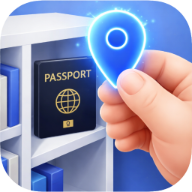
It always starts the same way. You need your passport - maybe for a flight tomorrow morning, maybe to verify your identity for a job. You open the drawer where you're pretty sure you left it. Not there. You try the filing cabinet. Still nothing. Twenty minutes later, papers scattered across the kitchen table, stress rising, you finally find it buried under three years of old utility bills.
Most people experience this at some point - and not just with passports. Insurance documents, birth certificates, mortgage papers, car titles. The things that matter most are often the hardest to find.
Here's the uncomfortable truth: most people think they have a system for organizing important documents. A drawer here, a folder there, maybe a box in the closet. But when the moment comes and they actually need something, the system fails. In this guide, we'll cover the most common mistakes people make when organizing documents at home, how to set up a physical system that actually works, and why that alone isn't enough in 2026.
The Most Common Document Organization Mistakes
Before building a better system, it helps to understand why the old one broke down. These are the four patterns we see most often when it comes to home document organization.
Keeping everything in one drawer
The "junk drawer" approach is the most common mistake. When everything goes in one place - receipts, warranties, tax documents, takeout menus - nothing is actually organized. Finding any specific document requires searching through everything else.
Relying on memory
"I know exactly where that is" - until you don't. Memory is unreliable for anything you access infrequently. You might remember where you put your passport the first week, but six months later that mental note has faded.
No digital backup
Physical documents can be lost in a fire, flood, or move. Without any digital record, losing the physical copy means losing the document entirely. A photo backup is the minimum - but most people never take it.
No shared awareness with family
Even if you know where everything is, what happens if a family member needs to find something while you're away? A system that only exists in your head is a system that fails everyone else in your household.
How to Physically Organize Your Documents at Home
A good home document organization system starts with the physical layer. Here's a simple approach that takes about an hour to set up and saves hours every year.
"A place for everything and everything in its place - the only rule that actually works for home document organization."
Use five categories
Divide your documents into five master categories: Identity (passport, birth certificate, Social Security card), Finance (bank statements, tax returns), Medical (insurance cards, vaccination records, prescription history), Property (lease/mortgage, car title, home warranties), and Insurance (all policy documents). Everything you own can be filed into one of these five buckets.
Color-code your folders
Buy five different-colored folders - one per category. Color-coding eliminates reading. You'll know instantly that the blue folder is Identity and the green folder is Finance. When you're under stress (and you will be), your eyes will find the color before your brain finds the words.
Store them somewhere you'll remember
The best storage for important documents at home is a fireproof lockbox or safe. Your documents are protected from fire and flooding, and the physical barrier means you'll always know exactly where they are. If a dedicated safe isn't practical, a clearly labeled box in a single dedicated drawer works too - but choose one location and commit to it permanently.
Create a "needs action" tray
Add a small tray on your desk or counter for documents that need to be dealt with (a bill to pay, a form to sign). Once handled, everything goes back into the main filing system. This prevents new documents from piling up and slowly eroding your organized system.
Schedule a yearly review
Set a recurring reminder - once a year - to go through your folders and discard anything outdated. Old insurance policies from plans you've canceled, expired warranties, bank statements from five years ago. Keeping your system clean means finding documents quickly when you actually need them.
Pro tip
Take 30 seconds when you add any new document to your filing system to also take a quick photo of it with your phone. This becomes your instant backup - and it's searchable later.
Why Physical Organization Isn't Enough
A well-organized filing system is a great foundation. But in practice, it solves only part of the problem. Here's where physical organization alone starts to break down.
When you move
The average person moves several times in their adult life. Every move is an opportunity for a carefully built filing system to collapse. Documents get consolidated into boxes during packing and never fully re-organized at the new place. The fireproof box ends up in the garage or a spare room, and suddenly "the system" is just "somewhere in that room."
When a family member needs to find something
Your partner needs the car insurance documents while you're traveling. Your elderly parent needs help finding their medical records for a doctor's appointment. Even if your filing system is perfect, it only helps the person who built it. Where to store important documents is only half the question - the other half is: who else knows where they are?
The problem of remembering where things are stored
Even within a good system, memory drift happens. Did you file the home warranty under "Property" or "Insurance"? Is the health insurance card in the Medical folder or in your wallet? The more documents you manage, the more cognitive load the system creates. And that cognitive load is exactly what a good system is supposed to eliminate.
"The gap isn't in the physical filing - it's in the memory of what's filed where."
This is exactly the problem a digital record solves.
What you actually need is a way to complement your physical filing system with a digital layer - one that tells you exactly where something is stored, lets family members access that information, and doesn't require you to remember everything yourself.
The Easiest Way to Create a Digital Record of Your Documents
You don't need a complex app or a scanner or a desktop software subscription. The simplest system that actually works looks like this: take a photo of each document, note where it's physically stored, and make that information searchable and shareable with your household.
That's exactly what Once Kept is built for. It's a home inventory app that works especially well for important documents - you photograph each one, add the physical location (e.g. "Fireproof box, bedroom closet"), and that information is instantly searchable from your phone.
Take a photo
Point your camera at any document. Once Kept identifies it and suggests a name automatically.
Add the location
Tag where it's physically stored - "Bedroom closet", "Filing cabinet drawer 2", wherever it lives.
Search anytime
Type "passport" or "insurance" and find it instantly - no more opening drawers at midnight.
Once Kept also has a shared family vault - so everyone in your household can access the same document index. When your partner needs the car insurance card, they don't need to ask you. They just search and find it. All photos are encrypted with AES-256, so even though the information is shared within your family, it stays completely private from anyone outside.
The System That Actually Works
The good news is that organizing your important documents doesn't have to be a weekend project. It can be done in stages, and you don't need to be perfect to start seeing the benefits.
Here's the simple system: five color-coded folders in a dedicated, consistent physical location - plus a digital record in your phone that tells you exactly where each document lives and lets your family find things without you. Physical + digital. That's it.
You don't need to photograph every document today. Start with the five most important ones: passport, birth certificate, insurance cards, car title, and health records. Twenty minutes of work. From that point forward, you'll never have that panicked midnight search again.
"You don't need a perfect system - you just need a consistent one."
The most important thing is starting. Pick one of the approaches above and do it this week. Future you will be very glad you did.
Never lose an important document again.
Once Kept gives you a searchable, encrypted vault for everything that matters.
You're on the list! Check your inbox.
Want to never lose your documents again?
Join the Once Kept waitlist for early access.
You're on the list! Check your inbox.
Written by
Once Kept Team
We build tools to help people organize their homes, keep their belongings safe, and spend less time searching for things that matter.